How to Choose the Right PVC Pipes and Fittings for Your Project?
Choosing the right PVC pipes and fittings is crucial for any construction project. The global PVC pipes market is projected to reach $84.24 billion by 2026, according to industry reports. This growth reflects the increasing demand for durable and cost-effective materials in plumbing and construction. However, not all PVC products are created equal.
Understanding the specifications of PVC pipes and fittings is essential. Factors like diameter, pressure rating, and application determine the best type needed for a project. For instance, using a fitting with the incorrect pressure rating can lead to failure and costly repairs.
Despite the wide availability of PVC options, many consumers still overlook critical details. This can result in inefficiencies and wasted resources. Selecting the right PVC pipes and fittings requires careful consideration of quality, application, and longevity. Making informed choices can lead to better project outcomes and long-term savings.
Understanding the Types of PVC Pipes Available for Your Project
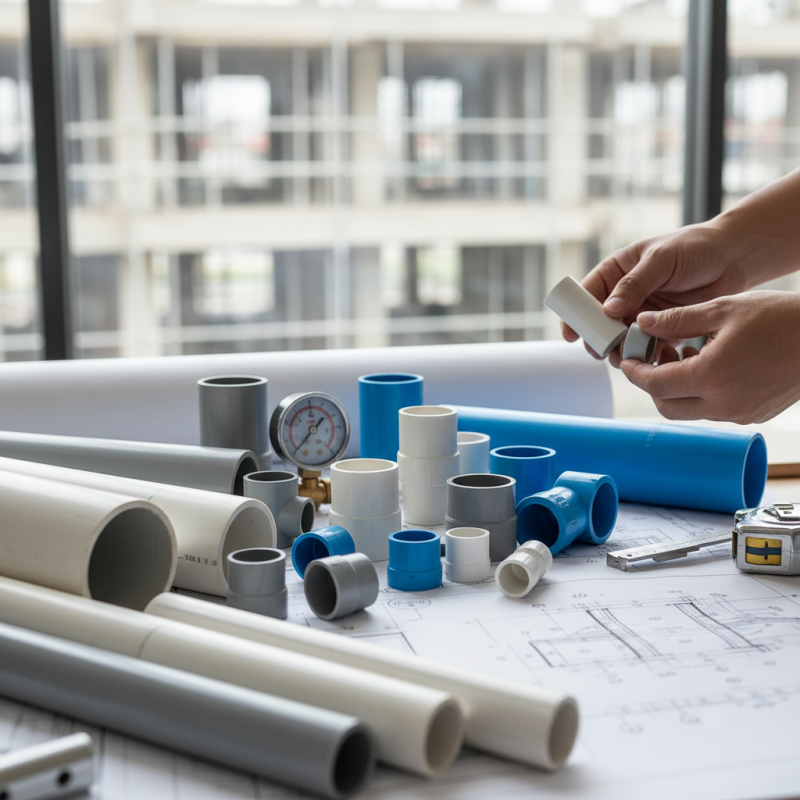
When choosing PVC pipes for your project, understanding the types available is crucial. PVC pipes come in various grades, sizes, and colors, each serving specific applications. For example, Schedule 40 and Schedule 80 pipes are common. Schedule 40 pipes are lighter and suitable for low-pressure systems. Schedule 80 pipes are thicker and can handle higher pressures, making them ideal for industrial applications.
A report by MarketsandMarkets indicates the PVC pipe market is expected to grow at a CAGR of 5.3% from 2021 to 2026. This growth is driven by increasing demand in construction and agriculture. However, not all projects require high-grade materials. Some users may underestimate the importance of selecting the right type, leading to failures.
Different projects demand different types of pipes. For drainage systems, for instance, Standard Drain Waste Vent (DWV) pipes are often preferred. Yet, many overlook proper fittings, which are vital for a leak-free installation. Cost and availability can also lead to poor choices. Often, the cheaper options may not perform as needed. Awareness of these factors can save time and money in the long run.
Assessing the Strength and Durability Requirements for Your Application
When selecting PVC pipes and fittings, understanding your project's strength and durability needs is crucial. PVC is known for its resistance to corrosion and chemicals. However, not all PVC is created equal. The variety in formulations affects their performance under stress. A study highlighted that Schedule 40 PVC pipes can withstand pressure up to 1400 psi, making them suitable for many applications. Yet, misuse can lead to failures.
Tips: Always assess the specific requirements of your project. Consider the pressure and temperature expectations. Regular testing can reveal weaknesses in your choice.
One key area often overlooked is UV resistance. Standard PVC can degrade if exposed to sunlight. This is vital for outdoor applications. Choosing UV-resistant options can save future headaches. Failure to consider this will result in unpredictable service life.
Alternatively, if your project demands flexibility, consider other polymers. PVC is rigid and may not provide the necessary bend. It's a common misconception that all pipe materials can fit any need, leading to potential failures. Assess your environment and load conditions carefully.
How to Choose the Right PVC Pipes and Fittings for Your Project?
| Property |
Standard |
Usage |
Strength (MPa) |
Durability Rating |
| PVC-U |
ASTM D1784 |
Water Supply |
55 |
High |
| PVC-C |
ASTM D3965 |
Chemical Handling |
65 |
Very High |
| Schedule 40 |
ASTM D3034 |
Drainage |
34 |
Medium |
| Schedule 80 |
ASTM D6785 |
Industrial Applications |
47 |
High |
Key Factors to Consider When Selecting PVC Fittings
Choosing the right PVC fittings for your project can be daunting. Different projects require different fittings. Understanding your needs is essential. Consider the pipe size and pressure rating. Each fitting has a specific purpose.
Tips: Always verify the dimensions before purchase. Measure twice, buy once.
Another key factor is the environment where the fittings will be used. Some areas require UV-resistant materials. Others might need corrosion resistance. It’s important to match the fitting to its intended environment. Overlooking this can lead to failures.
Tips: Think about temperature changes. Extreme conditions can affect durability.
Don’t forget about installation. Some fittings are easier to install than others. Check for compatibility with your tools. If you're unsure, consult a professional. This can save time and reduce errors.
Tips: Practice makes perfect. Try a few test connections before the final installation.
Installation Considerations for PVC Pipes and Fittings in Your Project
When installing PVC pipes and fittings, there are several crucial factors to consider. The type and size of the project dictate the right specifications. Evaluate the environment. Will the pipes be exposed to sunlight? UV exposure can weaken them. It's essential to choose UV-resistant fittings for outdoor use. Additionally, always check the temperature range. Certain materials might not perform well under extreme conditions.
Proper alignment is critical during installation. Misalignment can lead to leaks. Use a level to ensure accuracy. Before securing pipes, dry fit all components. This helps identify potential issues before the final assembly. Be cautious with the cutting. Uneven cuts can create gaps. Measure twice, cut once is a good rule here.
Additionally, consider the local building codes. They can dictate specific requirements for pipe installation. Ignoring these can result in costly mistakes. It's essential to be aware of approved methods and materials. Keep in mind that not all installations go as planned. Occasionally, you may need to adjust your approach mid-project. Flexibility is vital.