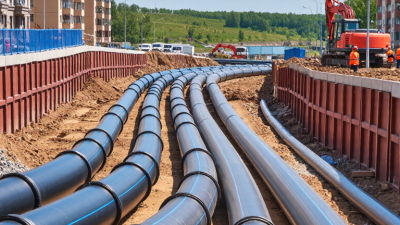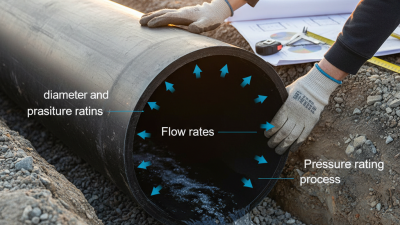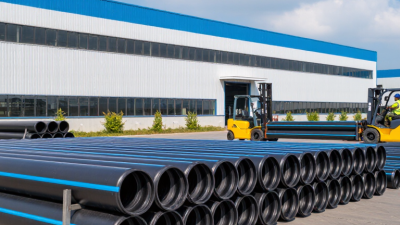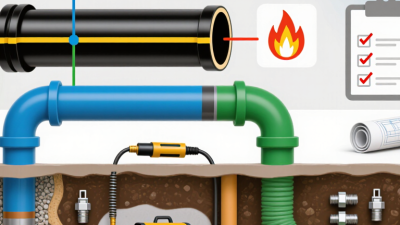
Vinidex manufacturers and supplies a broad range of products & systems to suit a range of applications.
Vinidex’s products and systems are versatile and can be used in a variety of markets and applications.
Choosing reliable HDPE sewer pipe manufacturers requires more than comparing prices, wall thickness, or export claims. Global buyers need evidence of material quality, production control, testing, and installation support. The 2024 UN World Water Development Report highlights growing pressure on water and sanitation infrastructure, especially where urban expansion outpaces public investment. That pressure makes durable sewer systems increasingly important.
HDPE has practical advantages.
Its flexibility helps absorb ground movement. Butt fusion can create nearly leak-resistant joints. Its smooth internal surface may also reduce friction and sediment buildup. However, performance depends on resin quality, pipe design, welding procedures, and site conditions. A technically strong manufacturer should provide traceable resin documentation, dimensional test results, hydrostatic pressure data, and compliance with recognized standards such as ASTM F714, ISO 4427, or EN 12201, where applicable.
The Plastics Pipe Institute’s PE4710 guidance emphasizes qualified materials, design calculations, and controlled installation practices. AWWA Manual M55 also stresses that polyethylene pipe selection cannot be separated from engineering conditions. This point is often missed. A catalog alone proves little.
UNICEF and WHO’s Joint Monitoring Programme reported that billions of people still lacked safely managed sanitation services in 2022. That figure signals substantial infrastructure demand, but it does not guarantee every supplier is dependable. Published market reports also use different definitions, regions, and forecast periods. Comparisons can therefore be imperfect.
This guide examines leading HDPE sewer pipe manufacturers for global buyers. It considers certifications, production capacity, quality assurance, customization, logistics, technical service, and verified project experience. Price matters. So does what happens after delivery.
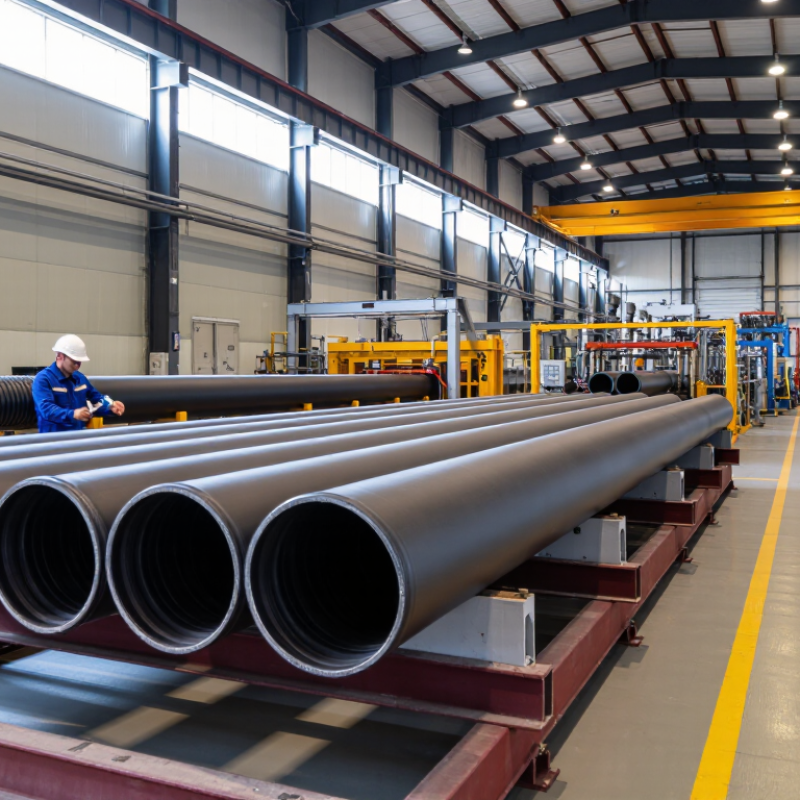
HDPE sewer pipes are made from high-density polyethylene, a tough and flexible thermoplastic. They are widely used for gravity sewers, drainage networks, and wastewater transport. Unlike brittle materials, HDPE can bend slightly when soil shifts. This flexibility helps reduce cracking during ground movement. Manufacturers join sections through heat fusion, creating smooth, leak-resistant connections. A properly installed system has fewer weak points and supports reliable wastewater flow.
HDPE matters because sewer failures can damage roads, soil, and nearby water sources. Its smooth inner surface can reduce friction and help limit buildup. However, material quality alone does not guarantee performance. Good pipes need accurate wall thickness, suitable stiffness, and consistent dimensions. Global buyers should review test reports, production controls, and compliance with recognized local standards. Field experience also matters. One practical lesson is easy to miss: ignoring soil conditions can cause trouble, even with excellent pipe. Installation design must consider bedding, temperature, groundwater, and expected loads.
Tips: Check the required diameter, wall thickness, and stiffness class before ordering. Confirm that joints match the installation method. Request product samples and inspection records when possible. Discuss local soil conditions with the manufacturer’s technical team. A low price may hide weak quality control. Mistakes happen. Careful verification reduces them.
HDPE sewer pipe systems are valued for their durability, flexibility, and resistance to corrosion. They perform well in acidic soil, wet ground, and many industrial wastewater environments. The smooth inner wall reduces friction and helps wastewater move efficiently. It also limits sediment buildup during normal operation. Fusion-welded joints create continuous connections with fewer leakage points than many gasketed systems. This matters in groundwater-sensitive areas. Their lighter weight can simplify handling and reduce the need for heavy lifting equipment. In practical projects, careful alignment still matters more than speed.
These pipes serve municipal sewers, stormwater networks, industrial drains, and wastewater treatment facilities. Their flexibility helps accommodate minor ground movement and uneven settlement. Contractors also use them for trenchless rehabilitation, where open excavation would disrupt roads or busy properties. Long pipe sections can reduce joint numbers and shorten installation time. However, benefits depend on correct design. Engineers should check flow requirements, external loading, temperature, groundwater pressure, and soil conditions before selecting a diameter and wall thickness.
HDPE is not flawless. Poor fusion temperatures, contaminated pipe ends, or weak bedding can cause serious defects. Installation crews need qualified training, calibrated equipment, and documented inspection records. Protective measures may be necessary where sunlight exposure continues before burial. Designers should also consider thermal expansion and contraction in exposed sections. A reliable system begins with suitable material, but field discipline decides much of its service life. Small installation shortcuts can become expensive maintenance problems later.
Reliable HDPE sewer pipe manufacturers control quality from resin selection to final inspection. They verify resin grades, melt flow, and moisture before production begins. This matters. Clean, consistent resin helps pipes resist cracking, deformation, and chemical exposure underground.
During extrusion, technicians monitor temperature, wall thickness, pressure, and line speed. Digital gauges record changes, while trained operators inspect the pipe surface for bubbles, burns, or uneven color. Samples are tested for dimensions, stiffness, tensile performance, and joint compatibility. Batch numbers connect each pipe to its production records. That traceability supports honest communication with contractors and global buyers. It also helps isolate problems quickly, although no system removes every risk.
Experienced manufacturers protect quality after testing. Pipes are stacked on level supports, shielded from sharp contact, and loaded without excessive bending. Export teams check markings, packing lists, and container conditions before dispatch. Small details matter at the job site. A scratched pipe may deserve another inspection, even when it passes earlier tests. Strong suppliers share test reports, explain limitations, and respond when field results challenge factory assumptions. That openness is often more valuable than polished promises.
Top HDPE Sewer Pipe Manufacturers Across Global Markets
Top HDPE sewer pipe manufacturers serve projects ranging from dense city networks to remote industrial sites. Their experience often appears in practical details, not polished brochures. They understand soil movement, groundwater pressure, temperature changes, and difficult installation conditions. Good manufacturers provide pipes with consistent wall thickness and documented material performance. They also maintain controlled production records for each batch. This evidence helps contractors trace quality before pipes reach the jobsite. Small details matter.
Global buyers should examine compliance with local standards, pressure ratings, jointing methods, and delivery capabilities. A pipe suitable for a cold northern project may require different testing in a hot coastal region. Manufacturers with experienced technical teams can review drawings, trench conditions, and fusion procedures before production. They should explain limits clearly rather than promise universal performance. That honesty builds trust. Independent test reports, factory inspections, and realistic lead times strengthen supplier evaluation. Packaging also deserves attention, especially when pipes travel long distances by road or sea. Damaged ends can delay an otherwise well-planned project.
Cost remains important, but the lowest quotation may hide thinner documentation or weaker support. Buyers should compare service life, installation risk, and replacement difficulty. Even experienced teams can overlook local drainage rules or soil data. Careful review prevents expensive assumptions. The strongest manufacturers combine reliable production, responsive communication, and field knowledge across diverse markets.
| Manufacturing Market | Typical HDPE Sewer Pipe Scope | Commonly Referenced Standards | Typical Diameter Availability | Jointing Methods | Key Buyer Quality Checks | Common Applications |
|---|---|---|---|---|---|---|
| North America | Solid-wall PE pressure and non-pressure sewer pipe; electrofusion and butt-fusion compatible systems | ASTM F714; ASTM D3350; project-specific AWWA, CSA, or municipal requirements | Commonly available from approximately 75 mm to 1,600 mm, subject to producer tooling | Butt fusion, electrofusion, mechanical couplings, restrained connections | PE compound cell classification, dimensions, hydrostatic performance, fusion procedures, traceability | Gravity sewers, force mains, sliplining, marine outfalls, industrial wastewater |
| European Union and United Kingdom | PE pipes for underground non-pressure drainage and sewerage, including structured project specifications | EN 12666-1; EN 12201 where pressure-service requirements apply; ISO 4427 for water-related pressure systems | Frequently specified from approximately 110 mm to 1,200 mm; larger fabricated systems are project dependent | Butt fusion, electrofusion, gasketed joints, flanged transitions | Ring stiffness or pressure class, dimensional tolerances, impact resistance, weld records, conformity documentation | Municipal drainage, foul-water sewerage, stormwater, rehabilitation, wastewater treatment plants |
| China and East Asia | Large-volume PE drainage and sewer pipe production, including solid-wall and engineered-profile systems | Applicable national, industry, municipal, and project specifications; ISO standards are commonly used for international supply | Common production ranges begin around 110 mm and may exceed 2,000 mm for selected systems | Butt fusion, electrofusion, socket or gasketed connections, custom fabricated fittings | Raw-material grade, wall thickness, ovality, melt-flow rate, hydrostatic testing, batch traceability | Urban sewer networks, flood-control drainage, industrial effluent, landfill leachate systems |
| Japan and South Korea | High-consistency PE pipe systems for municipal drainage, industrial wastewater, and seismic-installation projects | National product standards, utility-owner specifications, ISO references, and project seismic requirements | Typically available in small to large municipal diameters; exact range depends on local utility specifications | Butt fusion, electrofusion, mechanical transition joints | Dimensional accuracy, seismic flexibility, fusion quality, long-term hydrostatic strength, installation records | Seismic sewer networks, compact urban drainage, industrial plants, wastewater facilities |
| India and South Asia | HDPE drainage and sewer pipe for municipal, industrial, irrigation-related, and infrastructure projects | Bureau of Indian Standards specifications, ISO references, and tender-specific technical requirements | Commonly produced from approximately 20 mm to 1,600 mm, with availability varying by manufacturer | Butt fusion, electrofusion, flange adaptors, mechanical couplings | Material certification, pressure or stiffness class, wall-thickness uniformity, UV protection, batch testing | Urban sewerage, stormwater management, industrial discharge, trenchless replacement |
| Australia and New Zealand | PE drainage and sewer pipe systems designed for buried service, corrosive environments, and long installation life | AS/NZS 5065 for plastics pipes and fittings for drainage and sewerage; AS/NZS 4130 for applicable pressure pipe systems | Commonly available from approximately 90 mm to 1,200 mm; project-specific larger sizes may be available | Butt fusion, electrofusion, elastomeric seals, flanged connections | Ring stiffness, chemical resistance, deflection control, fusion qualification, installation and bedding requirements | Sewer mains, mine-site wastewater, coastal infrastructure, stormwater, rehabilitation projects |
| Middle East | HDPE sewer and drainage systems selected for high ambient temperatures, corrosive soils, and large infrastructure projects | Project specifications commonly reference ISO, EN, ASTM, or local utility standards | Frequently specified from approximately 110 mm to 1,600 mm, with larger diameters subject to project capacity | Butt fusion, electrofusion, flanged transitions, approved mechanical couplings | Temperature derating, UV stabilization, thermal expansion planning, pressure testing, fusion inspection | Desalination support systems, municipal sewerage, industrial wastewater, district drainage |
| Latin America | Flexible HDPE sewer, drainage, and wastewater pipe systems for urban and industrial infrastructure | National standards supplemented by ASTM, ISO, EN, and utility-owner specifications | Common supply ranges extend from approximately 50 mm to 1,600 mm, depending on local demand | Butt fusion, electrofusion, gasketed joints, flanged connections | Material origin, dimensional conformity, chemical resistance, hydraulic testing, installation compatibility | Municipal sewerage, mining wastewater, agricultural drainage, river and coastal outfalls |
| Africa | HDPE sewer and drainage pipe supplied for municipal expansion, mining, water-stressed regions, and industrial projects | Project-specific ASTM, ISO, EN, SANS, or utility standards, depending on the country and funding agency | Typically available from approximately 50 mm to 1,600 mm; large-diameter availability is project dependent | Butt fusion, electrofusion, mechanical couplings, flanged transition assemblies | UV resistance, impact strength, heat exposure, pressure or stiffness rating, field-fusion capability, logistics documentation | Mining operations, municipal sewerage, wastewater treatment, stormwater, remote-site infrastructure |
Note: Diameter ranges and standard references are typical market practices rather than guarantees for every manufacturer. Final selection should be verified against the applicable country standard, project specification, design pressure, burial conditions, and approved installation method.
Global buyers should evaluate HDPE sewer pipe suppliers beyond price and catalog claims. The OECD’s Global Plastics Outlook reported 353 million tonnes of plastic waste in 2019, with only 9% recycled. This makes resin traceability and responsible material management practical procurement issues, not marketing language.
Request resin certificates, melt-flow results, carbon-black content, and batch records for every production lot.
Confirm compliance with applicable standards, such as ASTM, ISO, or EN requirements for sewer applications.
Check whether the supplier performs hydrostatic, dimensional, impact, and fusion-quality testing.
Factory visits can reveal details that documents hide, including storage conditions, calibration routines, and operator discipline.
Ask for independent laboratory reports, not only internal certificates.
Field experience also matters. Request references from projects with similar diameter, soil movement, flow conditions, and installation methods. Review delivery records, technical support, warranty terms, and spare-production capacity. A supplier offering fast delivery may still create delays if jointing guidance is weak. Total cost should include trench preparation, butt-fusion equipment, inspection, freight, and future repairs. I would not trust the cheapest quotation without checking wall thickness consistency and ovality. A spreadsheet can still miss site realities. Before approval, test sample pipes and inspect markings, packaging, and traceability codes against the purchase specification.