
Vinidex manufacturers and supplies a broad range of products & systems to suit a range of applications.
Vinidex’s products and systems are versatile and can be used in a variety of markets and applications.
The global demand for efficient electrical equipment continues to increase across motors, transformers, generators, and renewable energy systems. Aluminium Winding Wire remains important because it offers low weight, useful conductivity, and practical material efficiency. However, performance depends on more than the conductor alone. Insulation quality, thermal endurance, dimensional consistency, and production control also matter.
This guide examines ten leading aluminium winding wire manufacturers worldwide. The selection considers manufacturing experience, product range, quality systems, technical support, and presence in major industrial markets. It also looks at details buyers often inspect closely, such as enamel uniformity, surface smoothness, elongation, and resistance stability. A reliable supplier should provide clear specifications, traceable testing records, and consistent delivery performance. Those details may seem ordinary. They often decide whether a winding process runs smoothly.
No global ranking can satisfy every buyer. Applications differ, and regional standards may influence the final choice. A manufacturer serving large transformers may not be ideal for compact motor windings. Even strong brands can have uneven product availability or limited support in certain regions. This comparison therefore offers a practical starting point, not a final purchasing decision. Engineers and procurement teams should verify current certifications, technical data, factory capabilities, and sample performance before committing. A careful review may take longer. It can prevent costly rework, insulation failures, and unexpected production delays.
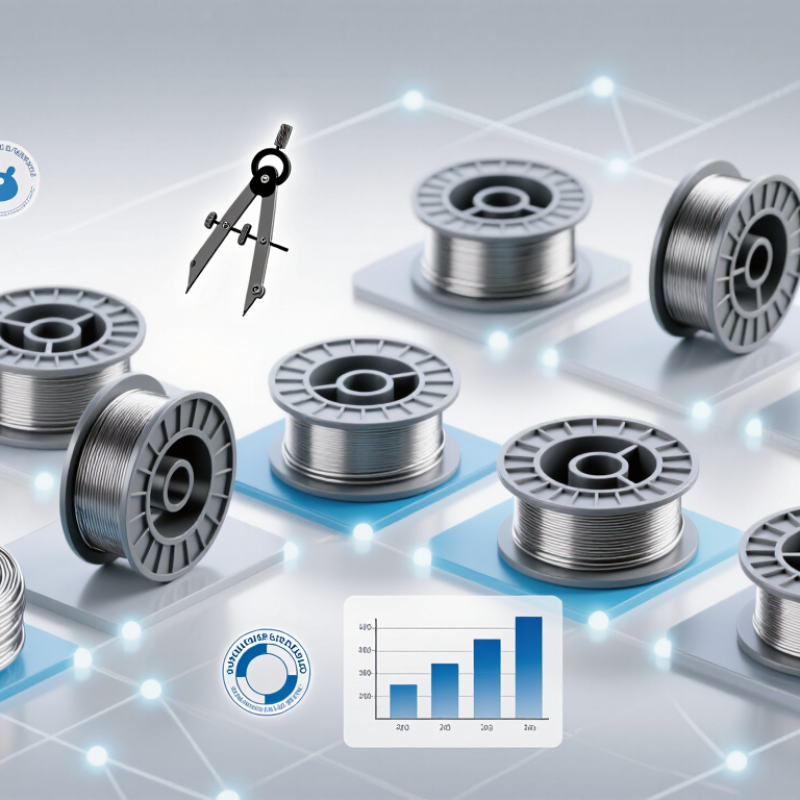
Aluminium winding wire is an insulated conductor used to create coils in motors, transformers, generators, and other electrical equipment. Its aluminium core carries current, while an enamel coating prevents turn-to-turn contact and short circuits. Compared with copper, aluminium is lighter and often more economical. However, it has lower electrical conductivity, so engineers may need a larger cross-sectional area for the same current.
In production, wire quality affects both efficiency and service life. A winding technician checks diameter tolerance, coating uniformity, elongation, and surface damage before placing wire on a bobbin. Even a tiny pinhole in the enamel can create failure under voltage stress.
During winding, controlled tension prevents crushed insulation and uneven coils. Aluminium also forms an oxide layer quickly, so terminals require suitable preparation and secure connections. Loose joints may heat noticeably during operation.
The material performs well when the design respects its thermal and mechanical limits. It expands differently from copper and can be more vulnerable to rough handling. That detail is easy to underestimate. In practical projects, poor termination can erase the expected cost advantage. Reliable manufacturers therefore combine conductor testing, insulation checks, and traceable process records. Specifications should match voltage, temperature, coil geometry, and expected operating hours, rather than relying on price alone.
Top 10 Aluminium Winding Wire Manufacturers Worldwide
Ranking global aluminium winding wire manufacturers requires more than comparing production volume. Technical consistency should carry the greatest weight. Reviewers should examine electrical conductivity, diameter tolerance, tensile strength, elongation, and insulation performance. A micrometer check across several spool layers can reveal uneven drawing quality.
Thermal endurance matters during motor and transformer operation. Test results should show how enamel insulation behaves after repeated heating cycles, vibration, and voltage stress. Compliance with recognized international standards strengthens credibility, but certificates alone are not enough. Independent laboratory reports, factory audits, and traceable batch records provide stronger evidence. Small details matter.
Manufacturing capability also affects a ranking. Reliable suppliers should offer stable alloy composition, controlled annealing, accurate coating thickness, and clean winding surfaces. Delivery performance deserves attention too. Compare lead times, packaging protection, complaint handling, and replacement procedures. A damaged flange or damp spool can create costly production delays.
Sustainability can refine the assessment. Consider recycled aluminium content, energy use, waste controls, and transparent environmental reporting. Customer references are useful when they describe actual motor temperatures, winding speeds, and service periods. Public information is often incomplete, however. Some manufacturers publish impressive figures without explaining test conditions. That weakness should reduce their score. Rankings may also change by application, because a high-temperature traction motor needs different priorities than a small household appliance. A careful evaluation should disclose its scoring method and admit where evidence remains limited.
| Rank | Anonymous Manufacturer Profile | Primary Production Footprint | Product & Process Capability | Relevant Technical Standards | Quality-System Evidence | Export & Supply Reliability | Sustainability Indicators | Weighted Score |
|---|---|---|---|---|---|---|---|---|
| 1 | Global Profile A Large-scale integrated producer | Multi-region manufacturing with established access to Asia, Europe, and the Americas | Round aluminium winding wire, enamelled wire, bare wire, and customized conductor solutions | IEC 60317; ASTM B800; NEMA MW 1000, where applicable | ISO 9001-based quality management; documented process controls and traceability | Broad export coverage, dual-source raw-material planning, and structured technical support | ISO 14001-oriented environmental management; recyclable aluminium input management | 92 / 100 Excellent |
| 2 | Global Profile B High-volume electrical-conductor specialist | Strong presence in East and Southeast Asia with international distribution capability | High-volume production of aluminium magnet wire with controlled diameter and insulation consistency | IEC 60317; ASTM B230/B800; customer-specific motor and transformer specifications | ISO 9001 certification framework, incoming-material inspection, and batch testing | Competitive lead times and established containerized export operations | Energy-efficiency programs and aluminium scrap recovery within manufacturing operations | 90 / 100 Excellent |
| 3 | Global Profile C European engineering-led producer | European production base with strong service coverage for industrial and energy customers | Enamelled aluminium wire for motors, transformers, generators, and other electromagnetic applications | IEC 60317; EN-aligned customer requirements; NEMA MW 1000, when specified | ISO 9001 quality procedures, laboratory verification, and application engineering support | Reliable regional delivery and strong documentation for regulated industrial projects | Environmental reporting, solvent-control measures, and waste-reduction programs | 88 / 100 Very Strong |
| 4 | Global Profile D Transformer and power-equipment supplier | Production concentrated in Asia with sales and technical support in multiple export markets | Large-size aluminium winding wire, rectangular conductors, and insulation systems for transformers | IEC 60317; IEC 60076 customer applications; ASTM requirements where requested | ISO 9001-based inspection plans, electrical-resistance testing, and dimensional control | Strong project-order performance and experience with heavy industrial shipments | Material-yield optimization and recovery of production offcuts | 86 / 100 Very Strong |
| 5 | Global Profile E North American application-focused producer | North American manufacturing with established service for motor, generator, and transformer markets | Magnet wire and winding conductors with application-specific insulation and thermal-class options | ASTM B800; NEMA MW 1000; IEC requirements for international projects | ISO 9001 practices, supplier qualification, and routine electrical and thermal testing | Short regional lead times and responsive engineering support for custom specifications | Recycled aluminium utilization and initiatives to reduce process energy consumption | 84 / 100 Very Strong |
| 6 | Global Profile F Specialty enamelled-wire manufacturer | Asia-based production with focused international sales channels | Fine and medium-gauge enamelled aluminium wire for compact motors, appliances, and coils | IEC 60317; ASTM B800; customer-defined thermal and dielectric requirements | ISO 9001 quality controls, online diameter monitoring, and insulation-defect testing | Good customization capability and stable supply for recurring orders | Low-waste enamelling processes and recovery of aluminium production scrap | 82 / 100 Strong |
| 7 | Global Profile G Integrated aluminium-conductor producer | Integrated regional manufacturing with access to aluminium rod and downstream wire processing | Bare, covered, and enamelled aluminium conductors for electrical equipment applications | ASTM B230/B800; IEC 60317 for insulated winding-wire products | Formal inspection procedures, batch traceability, and routine mechanical testing | Competitive pricing, scalable capacity, and developing overseas distribution network | Closed-loop scrap handling and improved raw-material utilization | 80 / 100 Strong |
| 8 | Global Profile H Regional custom-order manufacturer | Single-region production with selected international customers and distributors | Custom dimensions, insulation builds, and packaging formats for low- and medium-volume orders | IEC 60317 or ASTM B800 according to destination market and customer specification | Documented quality inspections with product certificates available by batch | Flexible order quantities, though international logistics coverage is more limited | Basic waste segregation, aluminium scrap recycling, and process-improvement initiatives | 77 / 100 Strong |
| 9 | Global Profile I Emerging export-oriented supplier | Asia-based facility serving domestic customers and selected overseas markets | Standard round aluminium winding wire and selected enamelled-wire constructions | IEC 60317 or ASTM B800 for applicable product categories | Quality procedures and in-house testing, with certification scope varying by facility | Growing export capability and competitive production economics | Aluminium scrap recovery and initial programs for energy and emissions monitoring | 74 / 100 Good |
| 10 | Global Profile J Value-focused industrial supplier | Regional manufacturing base with distribution through trading and engineering partners | General-purpose aluminium winding wire for motors, transformers, and electrical assemblies | Applicable IEC or ASTM requirements confirmed against individual purchase orders | Production inspection, basic batch documentation, and customer complaint controls | Cost-efficient supply with longer lead times for complex specifications or distant markets | Routine scrap recycling and developing environmental-management practices | 71 / 100 Good |
Evaluation weights: technical capability 25%, standards and quality compliance 20%, manufacturing scale 15%, supply reliability 15%, product range 10%, sustainability 10%, and customization support 5%. Final supplier selection should be validated through current certificates, technical datasheets, sample testing, factory audits, and contract-specific compliance documents.
Aluminium winding wire production is concentrated in regions with strong power, transport, and metal-processing networks. East Asia remains a major manufacturing center, supported by integrated aluminium smelters, rod mills, and insulation facilities. Large plants often sit near ports and industrial corridors. This reduces delivery time and protects production continuity.
Europe contributes through specialized plants serving motors, transformers, renewable-energy equipment, and railway systems. Manufacturers there usually emphasize precise dimensions, thermal performance, traceability, and documented testing.
North American facilities focus on utility networks, industrial motors, and replacement demand. Their geographic advantage includes established engineering services and shorter regional supply routes.
India and Southeast Asia are expanding their roles. Growing electricity demand is encouraging new capacity near urban manufacturing zones. The Middle East also benefits from aluminium availability, although downstream winding-wire expertise is still developing in some areas. Regional comparisons should examine conductor purity, elongation, coating consistency, quality records, and delivery reliability rather than factory size alone. Small differences matter.
A practical supplier review may reveal uneven data. Some companies publish detailed test results, while others provide limited technical evidence. That gap deserves attention. Freight disruptions, energy costs, and changing insulation requirements can quickly alter regional competitiveness. I would also question rankings based only on production volume; consistent quality and verified process control may matter more to equipment builders.
Profile 1 represents a large integrated producer with casting, rolling, and drawing under one roof. Its strength is stable conductivity. Profile 2 focuses on enamelled wire for motors, transformers, and compact generators. Engineers value its precise insulation thickness. Profile 3 serves high-volume appliance production, using automated diameter checks every few meters. Profile 4 specializes in rectangular aluminium wire for electric vehicle traction motors. Its edge lies in controlled corner radii and bending performance.
Profile 5 supplies custom conductors for industrial transformers. It often adjusts coating systems for heat, moisture, or chemical exposure. Profile 6 is known for fine-gauge winding wire, where tiny surface defects can cause rejection.
Profile 7 combines aluminium conductors with recyclable insulation systems. The idea is promising, but recycling performance still needs careful verification. Profile 8 supports regional manufacturers with shorter delivery times and flexible batch sizes. That practical advantage can outweigh a slightly lower quoted price.
Profile 9 develops high-temperature wire for demanding power equipment. Its technical teams usually test thermal aging, elongation, and dielectric breakdown. Profile 10 competes through application engineering rather than simple volume. It may help customers reduce winding space, though results depend on slot design and production skill.
Across these manufacturers, reliable evaluation requires more than comparing conductivity figures. Buyers should inspect quality certificates, sampling methods, coil dimensions, and traceability records. A factory visit can reveal uneven spooling, inconsistent labeling, or poorly protected storage.
These details seem minor. They are not. No supplier performs perfectly in every application, and published claims still deserve independent testing.
Top 10 Aluminium Winding Wire Manufacturers Worldwide
Comparing the top ten manufacturers requires more than checking annual output. Their technologies differ in casting, alloy control, drawing precision, and enamel insulation. Continuous casting can reduce material waste and improve conductivity consistency. Fine drawing and controlled annealing help produce flexible wire with fewer surface defects. Some suppliers offer round, rectangular, and paper-covered aluminium conductors for different winding designs.
Standards also separate reliable producers from average suppliers. Review compliance with IEC 60317, ASTM B230, ASTM B800, and NEMA MW 1000 where applicable. Test certificates should identify conductivity, elongation, coating adhesion, dielectric strength, and dimensional tolerance. ISO 9001 certification supports process control, but it does not guarantee every shipment performs perfectly. That point is often overlooked. Actual batch records matter more than polished brochures.
Tips: Match the wire to the application before comparing prices. Transformer windings may need rectangular enamelled wire for compact layouts and better heat transfer. Motors often require flexible round wire with stable insulation thickness. Ask for samples, thermal-aging data, and resistance measurements at a stated temperature. Check joint quality, delivery consistency, and technical support. A lower price can become expensive when stripping, winding, or repair losses increase. My practical view is cautious: supplier rankings change, and published comparisons may miss factory-level differences. Test before committing.