

Why Choose PVC Pressure Fittings for Global Projects?
Why Choose PVC Pressure Fittings for Global Projects?
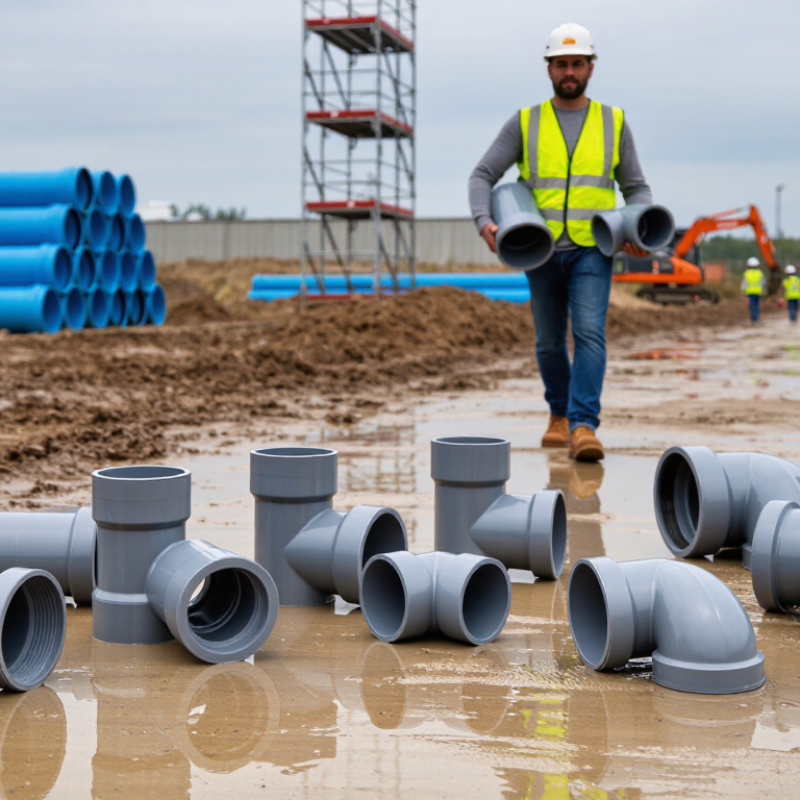
Global water, irrigation, and industrial projects demand more than low purchase prices. They require dependable joints, predictable performance, and practical installation. PVC pressure fittings meet these needs through corrosion resistance, smooth internal surfaces, and relatively low weight. A worker can carry several fittings across a muddy site without lifting equipment. That matters in remote locations.
Industry data supports this demand. Fortune Business Insights reports that the global PVC pipes market was valued at approximately USD 23.83 billion in 2023. It also forecasts continued growth through 2032, driven by water infrastructure, construction, and agricultural applications. Grand View Research similarly identifies replacement projects and expanding municipal networks as important market drivers. These reports do not prove that every PVC system is suitable. They show a wider movement toward engineered plastic piping.
Tony Radoszewski, former president and CEO of the Plastics Pipe Institute, has said, “Plastic piping systems provide reliable performance when properly designed and installed.” That condition matters. PVC pressure fittings are not a shortcut around engineering. Designers must check pressure ratings, temperature limits, chemical compatibility, standards, and joining procedures. ISO 1452 and NSF/ANSI 61 can support product selection for relevant water applications, while local codes still control final acceptance.
The picture is not flawless. Poor solvent cementing, contaminated surfaces, or mismatched components can cause leaks. Small errors become expensive underground. Yet, when manufacturers, engineers, and installers follow documented procedures, pvc pressure fittings offer a practical balance of durability, cost, and field efficiency. Global projects need that balance, even when conditions are far from perfect.
What Are PVC Pressure Fittings?
PVC pressure fittings are molded components designed to carry pressurized water or other approved fluids. They include elbows, tees, couplings, reducers, unions, and valves. Not just plastic elbows. Each fitting must match the pipe diameter, pressure rating, and connection method.
Unlike drainage fittings, pressure fittings have thicker walls and tighter dimensional control. Their smooth interior helps reduce friction and sediment buildup. In global projects, this can support potable water networks, irrigation systems, cooling lines, and industrial process piping. However, suitability depends on local regulations, fluid temperature, and chemical compatibility. PVC becomes less reliable under excessive heat or sudden impact.
Field installation requires more than selecting the correct size. Clean, square pipe cuts improve joint quality. Solvent cement joints need proper surface preparation, even application, and sufficient curing time. A rushed connection may look sound but leak later. I have seen alignment errors place stress on fittings, especially near pumps and buried transitions. Supports, thrust restraint, and pressure testing deserve equal attention.
Standards vary between regions, so engineers should verify markings, test requirements, and approved materials before procurement. Mixing incompatible components can create weak connections. That mistake is easy to miss. Good documentation also helps contractors trace batches, installation conditions, and test results when a project crosses borders.
| Evaluation Dimension | Typical PVC Pressure Fitting Characteristic | Practical Relevance for Global Projects |
|---|---|---|
| Material Definition | Rigid fittings made from unplasticized polyvinyl chloride, commonly identified as PVC-U or uPVC. | They are designed to connect pressure-rated piping systems for applications such as potable water, irrigation, process water, and water treatment. |
| Common Fitting Types | Elbows, tees, couplings, reducers, adapters, unions, caps, valves, and flange connections. | The broad fitting range supports changes in direction, branch connections, size transitions, equipment connections, maintenance access, and line termination. |
| Connection Methods | Solvent cement joining is widely used; threaded, flanged, and elastomeric-seal connections are also used where appropriate. | Different connection methods allow projects to balance installation speed, serviceability, equipment compatibility, and local installation practices. |
| Pressure Rating | Pressure capacity depends on nominal size, wall thickness, product standard, operating temperature, and the specific fitting design. Common systems are classified by pressure class or pressure rating. | Project engineers should select fittings from the same pressure-rated system as the pipe and apply the manufacturer’s temperature derating and design limits. |
| Temperature Capability | PVC pressure systems are generally intended for ambient and cold-water service. Long-term use at elevated temperatures reduces allowable pressure. | They are well suited to many water-distribution projects but are not a universal substitute for metal or high-temperature thermoplastic systems. |
| Corrosion Resistance | PVC-U does not rust and resists many salts, acids, alkalis, and common water-treatment chemicals; compatibility depends on concentration, temperature, and exposure time. | Corrosion resistance can reduce coating requirements and help maintain hydraulic performance in many aggressive soil and water environments. |
| Hydraulic Performance | The smooth internal surface generally produces low friction compared with rougher pipe materials. Surface condition can change with scaling, deposits, or chemical exposure. | Lower friction can support efficient water conveyance and may help reduce pumping energy when the complete system is correctly sized. |
| Weight and Handling | PVC fittings are substantially lighter than comparable metallic fittings and can usually be handled with less lifting equipment. | Lower handling weight can simplify transportation, storage, and installation in remote, congested, or labor-constrained project locations. |
| Installation Requirements | Solvent-welded joints require clean, dry, properly prepared surfaces and adequate curing time before pressurization. | Consistent preparation, correct cement selection, joint alignment, and field inspection are essential for reliable leak-free performance. |
| Standards and Compliance | Applicable requirements may include dimensional, pressure, material, and potable-water standards from the destination market or project specification. | Global projects should verify the required national or regional standards, certification documents, pressure classes, dimensions, and testing procedures before procurement. |
| Potable-Water Use | PVC pressure fittings may be suitable for drinking-water systems when the specific product, formulation, and joining materials meet the relevant regulatory requirements. | Approval must be confirmed for the destination country and intended service; general PVC suitability alone does not establish potable-water compliance. |
| Service Life Considerations | Long service life is achievable when fittings are correctly selected, protected from excessive temperature and impact, and installed according to the system requirements. | Design life depends on pressure cycles, temperature, chemical exposure, ultraviolet exposure, soil conditions, installation quality, and maintenance practices. |
| Environmental Exposure | Unprotected PVC can be affected by prolonged ultraviolet exposure, while buried installations require suitable backfill, support, and protection from impact. | Storage and installation plans should include protection from direct sunlight, extreme heat, mechanical damage, and incompatible chemicals. |
| Typical Applications | Municipal and building water distribution, irrigation, aquaculture, swimming pools, water treatment, drainage under pressure, and selected industrial-fluid systems. | The material is especially practical where corrosion resistance, low weight, and efficient fluid conveyance are important project objectives. |
| Key Limitations | Not suitable for every high-temperature, high-impact, solvent-exposed, or mechanically demanding application; brittleness may increase at low temperatures or after severe impact. | A complete design review should consider temperature, pressure surges, water hammer, chemical compatibility, support spacing, seismic conditions, and fire requirements. |
| Selection Checklist | Confirm material type, nominal size, pressure class, temperature derating, connection method, dimensions, standards, chemical compatibility, and required certifications. | This checklist helps ensure that fittings sourced for different regions remain compatible with the pipe system and satisfy the project’s technical and regulatory requirements. |
Note: Pressure ratings, dimensions, temperature limits, chemical resistance, and certifications vary by product design and applicable standard. Always verify the approved technical documentation for the specific project conditions.
Related Posts
-
China Top 10 PVC Pressure Pipe Fittings Suppliers
-

Understanding the Essential Role of PE Pipe Fittings in Modern Plumbing Systems
-
Top 10 Benefits of Using PVC Pressure Fittings for Your Plumbing Projects?
-
2026 How to Choose the Best Plastic Pipe Fittings for Your Needs?
-
China Top PVC Pipes and Fittings Suppliers?
-
Where to Buy PVC Pressure Pipe Fittings in China?