

How to Choose the Best HDPE Water Pipe?
Choosing the best hdpe water pipe requires more than comparing price, diameter, and pressure ratings. The application decides the right specification.
The United Nations World Water Development Report 2024 highlights growing pressure on freshwater systems worldwide. Aging networks, leakage, drought, and extreme weather make material selection increasingly important. HDPE is valued for its flexibility, corrosion resistance, and fused joints. These features can reduce leak paths in buried water systems. However, HDPE is not automatically suitable for every project. Temperature, soil movement, installation quality, and disinfectant exposure still matter.
A reliable selection process should connect field conditions with recognized standards. AWWA Manual M55 explains polyethylene pipe design, joining, and installation practices. ISO 4427 covers polyethylene piping systems for water supply and related applications. The Plastics Pipe Institute’s Handbook of Polyethylene Pipe also provides technical guidance on pressure design, trenching, fusion, and long-term performance. These sources are useful, but they should support engineering judgment, not replace it.
Check the details carefully.
Begin with the required flow rate, operating pressure, surge pressure, and expected service life. Confirm the pipe’s PE grade, SDR, nominal diameter, and certification for potable water. Examine fusion procedures, installer qualifications, and available inspection records. A pipe may look strong on a warehouse floor yet fail after poor electrofusion or inadequate bedding. That uncomfortable possibility deserves attention. In practice, the best choice balances hydraulic efficiency, installation risk, lifecycle cost, and local compliance. The following guide examines each factor so buyers can make a defensible, evidence-based decision rather than selecting the cheapest pipe on a quotation.
Understanding HDPE Water Pipe Properties and Applications
How to Choose the Best HDPE Water Pipe?
Understanding HDPE Water Pipe Properties and Applications
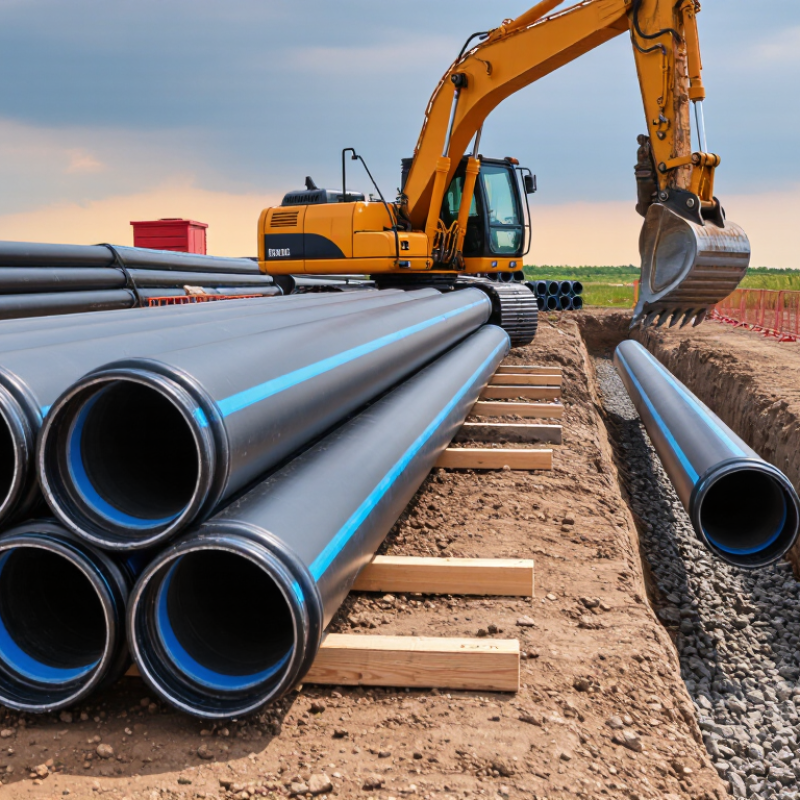
HDPE water pipe is valued for flexibility, impact resistance, and long service life. It bends around gentle curves, reducing the need for extra fittings. It stays flexible. This helps on uneven ground and in areas with minor soil movement. Its smooth inner wall also limits friction and supports efficient water flow. However, performance depends on correct sizing, pressure ratings, and installation quality.
Pipe selection should match the water temperature, operating pressure, soil conditions, and expected flow rate. Potable water systems require materials approved for drinking-water contact. Agricultural lines may need different pressure performance than municipal networks. Measure twice. A qualified engineer should verify calculations before installation. In field inspections, poorly prepared joints often cause more trouble than the pipe itself. Heat-fusion connections can create continuous, leak-resistant lines, but trained technicians must control temperature, alignment, and cooling time.
HDPE also suits drainage, irrigation, industrial water, and trenchless replacement projects. Its low weight can simplify transport and handling, although long coils still require careful support. Protect the pipe from sharp stones and excessive dragging. Details matter. I would not choose HDPE by diameter alone. Wall thickness, joining method, local standards, and maintenance access deserve equal attention. No selection is perfect; a cheaper pipe can become expensive when pressure changes, soil movement, or installation errors are ignored.
How to Choose the Best HDPE Water Pipe? - Understanding HDPE Water Pipe Properties and Applications
| Selection Dimension | Typical HDPE Water Pipe Information | Why It Matters | Common Applications |
|---|---|---|---|
| Material Type | High-density polyethylene, commonly PE 4710 or an equivalent water-service grade in North American practice. | The resin grade affects long-term strength, pressure capability, temperature resistance, and regulatory suitability. | Potable-water mains, raw-water lines, irrigation, service connections, and industrial water systems. |
| Density | Approximately 0.93–0.97 g/cm³, depending on the resin formulation. | Low density makes the pipe lighter than many rigid alternatives and simplifies transportation and handling. | Long-distance water-main installation, trenchless replacement, and projects with difficult site access. |
| Flexibility | HDPE pipe can be supplied in long coils for smaller diameters and in straight lengths for larger diameters; minimum bend radius depends on diameter, SDR, temperature, and installation method. | Flexibility helps the pipe follow gradual changes in alignment and can reduce the number of fittings and joints. | Curved routes, river crossings, directional drilling, and installations in areas subject to ground movement. |
| Impact Resistance | High impact toughness compared with many conventional rigid pipes, especially at low temperatures. | Improves resistance to handling damage, installation shocks, and localized external loads. | Rocky soils, cold-weather construction, replacement projects, and temporary water systems. |
| Corrosion and Chemical Resistance | Does not rust or corrode electrochemically; generally resistant to many acids, alkalis, salts, and naturally occurring soil chemicals. | Reduces the risk of internal corrosion and external soil-side corrosion, although chemical compatibility must still be checked. | Aggressive soils, coastal environments, wastewater-related water systems, and selected industrial applications. |
| Jointing Method | Butt fusion and electrofusion create thermally fused joints; mechanical fittings are also available where required. | Proper fusion can produce a leak-resistant, fully restrained pipeline with fewer potential leak points than mechanically joined systems. | Municipal water mains, trenchless projects, restrained crossings, and networks requiring high joint reliability. |
| Pressure Rating | Common pressure classes include approximately 80, 100, 125, 160, and 200 psi in some North American sizing systems; actual ratings depend on resin, SDR, diameter, temperature, and standard. | The selected pressure rating must cover working pressure, surge pressure, and the effects of operating temperature. | Distribution mains, transmission lines, pump discharge lines, irrigation, and service piping. |
| SDR and Wall Thickness | SDR is the outside diameter divided by the minimum wall thickness. A lower SDR generally indicates a thicker wall and higher pressure capacity. | SDR allows engineers to compare wall thickness and pressure performance across pipe sizes. | Selecting pipe for high-pressure systems, deep burial, unusual loads, and long design-life requirements. |
| Hydraulic Performance | A smooth internal surface typically produces low friction losses; the Hazen–Williams coefficient is often assumed near 150 for new HDPE in preliminary water-flow calculations. | Lower friction can reduce pumping energy or allow the required flow through a smaller nominal size, subject to engineering verification. | High-flow transmission mains, pump systems, irrigation networks, and municipal distribution. |
| Temperature Range | Water-service pressure ratings are commonly based around 20–23°C. Long-term pressure capacity decreases as operating temperature rises; special design is needed near or above 60°C. | Temperature affects creep, pressure capacity, expansion, contraction, and expected service life. | Cold-region water lines, warm-climate installations, and selected non-potable water systems. |
| Thermal Expansion | The linear expansion coefficient is commonly about 0.15–0.20 mm/m·°C, depending on formulation and temperature. | Above-ground sections and exposed pipelines require allowances for movement, supports, and restrained transitions. | Bridge crossings, above-ground process-water lines, exposed service pipes, and temporary installations. |
| UV Resistance | Black HDPE pipe containing suitable carbon-black stabilization provides improved resistance to ultraviolet exposure; other colors may require additional protection. | Long-term outdoor storage and exposure can affect polymer performance if the pipe is not properly stabilized or protected. | Outdoor water lines, above-ground piping, construction-site systems, and agricultural irrigation. |
| Potable-Water Compliance | For drinking-water service, the complete pipe and fitting system should comply with the applicable local health and material requirements, such as NSF/ANSI/CAN 61 where applicable. | Compliance confirms that materials are suitable for contact with drinking water and meet project regulations. | Public water supply, building service connections, water treatment facilities, and potable-water storage systems. |
| Expected Service Life | When correctly specified, installed, and operated within design limits, HDPE water pipe is commonly designed for a service life of at least 50 years. | Long design life can reduce replacement frequency, disruption, and whole-life maintenance costs. | Permanent municipal infrastructure, buried transmission lines, irrigation systems, and industrial utilities. |
| Recommended Selection Checklist | Confirm fluid type, required flow, working and surge pressure, design temperature, diameter, SDR, installation method, soil conditions, joining procedure, and applicable standards. | A pipe is suitable only when its material, dimensions, pressure rating, and installation method match the complete system design. | All HDPE water-pipe projects, from small service lines to large buried transmission mains. |
Related Posts
-
How to Choose the Best HDPE Water Pipe?
-
What Is the Best HDPE Pipe for Global Buyers?
-
How to Choose the Right HDPE Water Pipe for Your Project?
-

Understanding the Essential Role of PE Pipe Fittings in Modern Plumbing Systems
-
Exploring the Versatility of Black Plastic Pipe in Modern Infrastructure Solutions
-
How to Choose the Best Black Plastic Pipe for Your Project?