Vinidex manufacturers and supplies a broad range of products & systems to suit a range of applications.
Vinidex’s products and systems are versatile and can be used in a variety of markets and applications.
Choosing the right poly water pipe can affect flow, maintenance costs, and the reliability of an entire water system. A pipe may look durable on a store shelf, yet its performance depends on pressure, temperature, soil conditions, and installation quality. The best choice is rarely based on price alone. It must suit the real environment.
In this guide, we examine ten practical tips for selecting a poly water pipe with greater confidence. We consider pipe diameter, pressure ratings, material quality, flexibility, fittings, UV exposure, and expected service life. A professional installer would also inspect the trench depth, connection points, and local water requirements before recommending a product. Small details matter. A poorly matched fitting can create leaks, even when the pipe itself is excellent.
Experience also teaches an uncomfortable lesson: no checklist can predict every site problem. Ground movement, careless handling, or unexpected heat may change the result. That is why reliable suppliers, clear product documentation, and qualified installation support deserve careful attention. Buyers should compare tested specifications instead of trusting vague durability claims. They should also ask whether the pipe is suitable for drinking water, irrigation, or other intended uses. A thoughtful decision may take longer, but it can prevent repeated digging, wasted water, and costly repairs later. These tips provide a practical starting point, while site-specific advice remains essential.
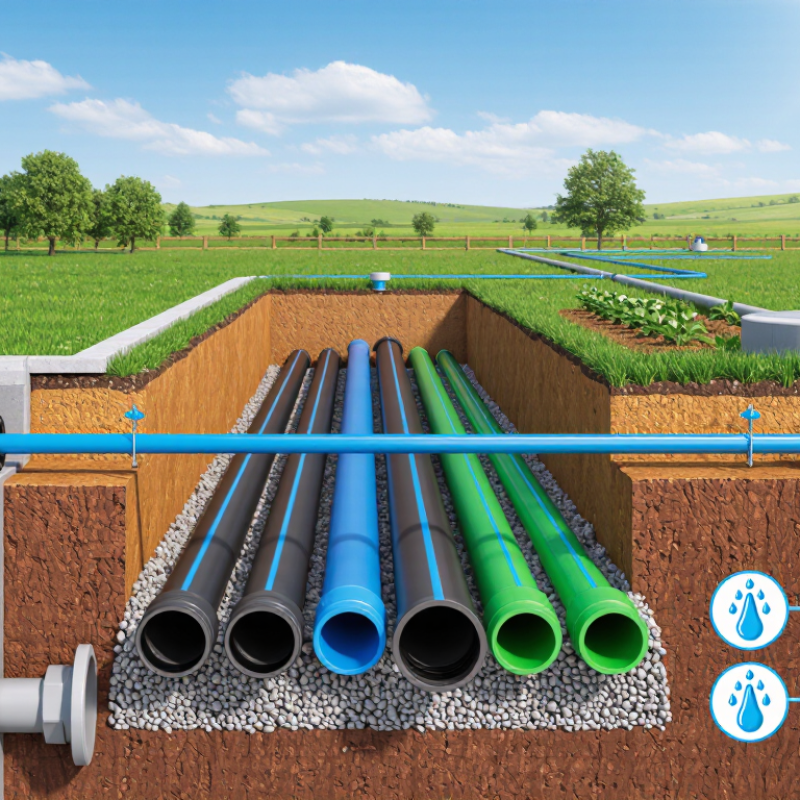
Choosing the best poly water pipe starts with identifying the material, not comparing color or price. High-density polyethylene (HDPE) has strong stiffness, impact resistance, and chemical durability. It is widely used for buried mains and larger service lines. Heat-fused joints can create a continuous, leak-resistant system.
Medium-density polyethylene (MDPE) is more flexible than HDPE. That flexibility helps when installers work around bends, uneven soil, or older connections. However, MDPE pressure ratings vary by dimension, temperature, and application. Check the applicable AWWA C901 requirements and manufacturer tables. A thinner wall is not automatically a poor choice. It may simply serve a different pressure class.
PEX is cross-linked polyethylene, commonly selected for indoor cold and hot-water distribution. It bends easily, reducing elbows and connection points. ASTM F876 and ASTM F877 define important performance requirements for PEX tubing and systems. The U.S. Environmental Protection Agency’s WaterSense program reports that household leaks can waste nearly 10,000 gallons of water annually. That figure makes joint quality and installation discipline practical concerns, not minor details. PEX still needs protection from sunlight, sharp edges, and excessive heat. HDPE and MDPE also require careful trench bedding and fusion preparation. This is where selection advice becomes imperfect: the “best” pipe depends on pressure, temperature, soil, movement, and repair access. Consult current standards. Site conditions often challenge the neat answer.
Typical maximum continuous service temperature by poly pipe type
PEX generally supports higher continuous operating temperatures than HDPE and MDPE, making it suitable for hot-water applications. HDPE and MDPE are commonly selected for cold-water distribution, underground service lines, and applications where impact resistance and flexibility are important. Actual performance depends on pipe dimension, pressure, installation conditions, and the applicable standard.
Choosing the best poly water pipe starts with pressure, not price.
Confirm the system’s working pressure, surge pressure, temperature, and expected service life. Then match the pipe’s pressure rating to its SDR value. SDR means outside diameter divided by wall thickness. A lower SDR usually means a thicker wall and greater pressure capacity.
PE4710 has a 1,000-psi hydrostatic design basis at the reference temperature. That figure describes material strength, not the pipe’s operating pressure. Do not read it as a 1,000-psi service rating.
The allowable design stress depends on the applicable standard, safety factor, temperature, and fluid. For example, a pipe with SDR 11 may carry a different rating than SDR 17, even when both use the same material. Check the manufacturer’s certified pressure table.
Small details matter. Measure the actual outside diameter before selecting fittings. Review surge conditions near pumps, valves, and steep slopes. Account for higher water temperatures, which can reduce allowable pressure. Confirm the joining method and its qualification. Inspect pipe markings for size, SDR, material designation, standard, and production traceability. Ask for test documentation when the application is critical.
A simple SDR shortcut feels convenient, but it can mislead. I would rather recheck the pressure calculation than trust a familiar number. Temperature, not confidence, often exposes the weak assumption.
Choosing the best poly water pipe starts with more than diameter, pressure rating, or price. For potable-water use, verify compliance with NSF/ANSI/CAN 61. This standard evaluates materials that contact drinking water and helps identify potential chemical leaching concerns. Ask for a current certificate, scope of approval, and product identification matching the pipe being supplied.
ASTM standards add another layer of technical confidence. Check the exact ASTM designation, edition, pipe dimensions, pressure class, resin requirements, and test methods. Do not assume that an ASTM reference automatically proves drinking-water suitability. It may address performance without covering health effects. The certificate should also identify the intended service, temperature limits, joining method, and production traceability.
Look closely at the paperwork. Product markings should remain readable along the pipe length, even after storage outdoors. Compare those markings with the certificate and delivery documents. During inspection, check for crushed sections, deep scratches, contamination, or poorly sealed ends. Small defects can become serious at joints.
Ask practical questions. Is the certification valid? Does it cover this size? Is the material formulation unchanged? A supplier should answer clearly and provide test records when appropriate. Field experience teaches a useful lesson: standards reduce uncertainty, but they do not replace installation judgment. I have seen compliant materials perform poorly after careless handling. Do not guess. Record every verification step before installation.
| No. | Selection Focus | Relevant Requirement or Standard | What to Verify | Practical Selection Tip |
|---|---|---|---|---|
| 1 | Potable-water safety |
NSF/ANSI/CAN 61 Health effects requirements for drinking-water system components, including applicable plastic piping materials and products. |
Confirm that the exact pipe construction, resin, color, size range, and intended use are covered by current potable-water certification or evaluation. | Do not rely on the words “food grade” or “potable” alone; request the applicable certification documentation and scope. |
| 2 | Pipe material identification |
ASTM D3350 Classification system for polyethylene plastic pipe and fitting materials using properties such as density, melt index, flexural modulus, tensile strength, and environmental stress-crack resistance. |
Review the polyethylene material designation and confirm that the specified material is suitable for the pressure, temperature, and service conditions. | Compare the material cell classification and resin documentation rather than selecting pipe based only on nominal diameter. |
| 3 | Pressure rating |
ASTM F714 Polyethylene pipe dimensions are commonly specified by outside diameter and dimension ratio for pressure applications. |
Check the pipe’s pressure rating at the actual operating temperature, including sustained pressure and any applicable design reduction factors. | Choose a suitable dimension ratio (DR); a lower DR generally means a thicker wall and higher pressure capacity when other conditions are comparable. |
| 4 | Correct dimensional system |
ASTM F714
ASTM D3035 These standards address different polyethylene pipe dimensional and pressure applications, so the specified product type must match the project design. |
Confirm whether the system uses outside-diameter-controlled pipe, iron-pipe-size dimensions, or another specified dimensional series. | Match pipe, fittings, valves, and joining tools to the same dimensional system to prevent incompatible connections. |
| 5 | Temperature exposure | Polyethylene pressure ratings are temperature-dependent; the allowable working pressure normally decreases as service temperature rises. | Identify the minimum and maximum water and ambient temperatures, including temporary temperature peaks and above-ground solar heating. | Use the manufacturer’s temperature-adjustment data and avoid applying a room-temperature pressure rating to hotter service conditions. |
| 6 | Disinfection and chemical compatibility | Potable-water pipe must be compatible with the project’s disinfectant, concentration, exposure time, and water chemistry. | Check compatibility with chlorine, chloramine, cleaning chemicals, soil conditions, and any treatment chemicals used in the system. | Obtain written compatibility limits for the actual disinfectant program instead of assuming that all polyethylene grades perform identically. |
| 7 | Joining method |
ASTM F2620 Practice for heat-fusion joining of polyethylene pipe and fittings, including butt fusion and socket fusion procedures. |
Confirm that the pipe and fittings are designed for the selected joining method and that required fusion equipment, heating temperatures, and alignment controls are available. | Prefer a pipe system with a documented joining procedure and trained installers; poor fusion practice can compromise an otherwise suitable pipe. |
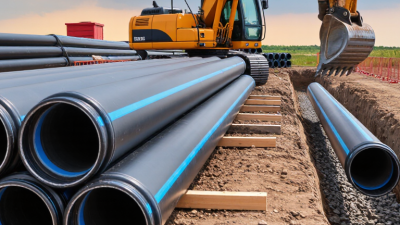
| 8 | Burial and installation conditions | Flexible polyethylene pipe relies on proper soil support and installation practices; trench geometry, bedding, backfill, and compaction affect performance. | Review minimum cover, trench width, backfill material, deflection limits, groundwater conditions, and exposure to sharp objects or construction damage. | Select pipe based on the complete installation design, not pressure rating alone, especially where traffic loads or unstable soils are present. |
| 9 | Water hammer and surge | Transient pressure can exceed normal operating pressure when pumps start or stop and when valves close rapidly. | Evaluate pump controls, valve-closing times, elevation changes, line length, trapped air, and the calculated maximum surge pressure. | Ensure the pipe’s combined pressure design accounts for both sustained pressure and transient pressure, with suitable surge-control measures where necessary. |
| 10 | Traceability and quality control | Product markings and quality records support verification of material, size, DR, production lot, standard designation, and intended service. | Inspect pipe markings, certificates, lot information, dimensions, surface condition, storage history, and test records before installation. | Reject pipe with deep gouges, cuts, severe kinks, contamination, illegible markings, or documentation that does not match the specified product. |
Tip 1: Compare internal flow, not just outside diameter. A larger-looking pipe may have thick walls and less usable space. Check the inside diameter, pressure rating, and expected demand. Smooth poly surfaces usually reduce friction, but fittings, valves, and sharp bends can still restrict flow. Tip 2: Ask for flow tables based on your actual pipe length and pump pressure. A quick estimate is helpful, but it is not a final design.
Tip 3: Review temperature limits carefully. Poly pipe may handle normal cold-water service well, yet pressure capacity often decreases as temperature rises. Confirm the rating at your operating temperature, not only at room temperature. Brief heat exposure and continuous heat are different conditions. I once underestimated this difference on a small installation. That mistake changed the specification. Allow for hot ground, sunlight, and seasonal temperature swings.
Tip 4: Evaluate UV exposure when the pipe will remain above ground. Black, UV-stabilized material generally offers better outdoor resistance, but protection may still be wise. Use shading, covers, or approved insulation where practical. Inspect exposed sections for fading, cuts, and surface damage. Tip 5: Treat the 50-year design life as a design assumption, not a promise. It depends on pressure cycles, temperature, soil conditions, water chemistry, installation quality, and handling. Follow applicable local standards and the supplier’s technical data. A careful trench and proper bedding matter as much as the pipe itself.
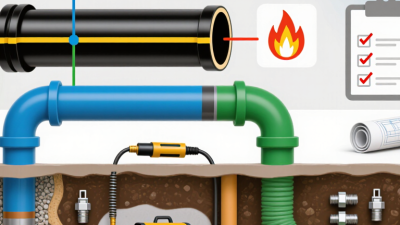
Butt fusion creates a continuous polyethylene joint, while electrofusion suits repairs and restricted spaces. AWWA M55 explains that trained technicians, controlled heat, and clean pipe ends strongly affect joint reliability. I have seen cheap installations fail after rushed preparation. The pipe was not the only problem.
Fittings should match the pipe’s outside diameter, resin class, and intended service pressure. ASTM F2620 provides guidance for heat-fusion procedures, but field records still matter. Ask for fusion logs, pressure-test results, and installer qualifications. These documents may feel excessive. They are useful when a buried leak appears years later.
Trenching, bedding, traffic control, testing, restoration, and labor can exceed the pipe price. The U.S. EPA’s 2023 Drinking Water Infrastructure Needs Survey estimated $625 billion in needs from 2021 through 2040. That scale makes lifecycle planning important, not optional. Request two estimates: open-trench installation and directional drilling, where suitable.
Confirm coverage periods, approved joining methods, installation exclusions, and responsibility for labor or removal. A long material warranty may not cover poor workmanship. Keep delivery records and site photographs. ASCE’s 2021 Infrastructure Report Card rated U.S. drinking water infrastructure C-minus, reminding buyers that maintenance evidence matters. I would also question unusually broad claims. They often hide practical limits.